APRIL 2022
Saturday, April 2, 2022
Thursday, March 3, 2022
MARCH 2022
Monday, January 31, 2022
TRIBUTE TO OUR PRECIOUS MAGGIE
August 12, 2010 – January 25, 2022
LIFE LESSONS LEARNED FROM MAGGIE
By Rev Protodeacon George Anthony Haloulakos
We have commended our precious pet Maggie into the loving embrace of Our Lord and Savior Jesus Christ. We had to alleviate Maggie's suffering from Degenerative Myelopathy – a debilitating illness exactly like ALS (Amyotrophic Lateral Sclerosis) in our precious pets with the same impact as ALS has on humans. I did a prayer service while assisting the two veterinarians and kissed Maggie more than several times to help her on a heavenward journey. All of this took place at home as we utilized a truly amazing service called PAWS INTO GRACE.
She will be cremated and her cremains will be hand delivered to us in a special urn made of Acacia wood with the inscription:
Our Precious Maggie
Aug 12, 2010 - Jan 25, 2022
We are also getting a special paw print to go with it. Believe it or not, Maggie departed this life at the same hour as Mom & Dad, and three years to the month of my father's passing! In some ways I feel as if I am reliving it all over again. I am so grateful that God placed this special pet in our lives as Maggie impacted so many in the course of her ministry here on Earth. With this in mind, I would like to share lessons I learned from Maggie.
> Lead a Christ Centered Life: Maggie lived her life in the way Our Lord and Savior Jesus Christ teaches us to be. Each day this Pembroke Welsh Corgi showed love, peace, patience, joy, kindness, goodness and faithfulness. In this way, Maggie exemplified that the love from a pet is a reflection of God's love – it is unconditional!
> Bearing One's Burdens While Helping Others: Maggie was a registered service animal for more than 10 years and impacted the lives of hundreds if not thousands of people in the venues she served. She did this despite having to endure major hip surgery as a 6-month old puppy and then foot surgery when she was 3-years old. Maggie's own experience with health challenges enabled her to establish deep connections with everyone she encountered, even in the most casual circumstances. As a working dog, Maggie was able to give comfort to others as a:
Teaching Assistant at UC San Diego Extension – From 2010 – 2020, Maggie accompanied me to the main campus and satellite learning centers four days a week. For four to six hours each of those days she provided comfort to students both in and out of the classroom. During breaks from class we would walk about campus drawing crowds of students as Maggie would allow everyone to give hugs, pets and kisses plus posing for lots of pictures that ended up in multiple social media networks.
Therapy Dog at Le Bleu Chateau Assisted Living & Memory Care Center – From 2011 - 2018, Maggie helped minister to the elderly, memory care and those afflicted with major illnesses such as cancer patients. Maggie provided a steadfast, vigilant presence to alleviate the loneliness and isolation of those stricken with such conditions. In this same capacity Maggie helped my parents into that Long Day's Journey Into Night and thereby enabled yours truly (along with my wife Sharon) to fulfill the sacred duties associated with such a monumental task.
Grief Comfort at Forest Lawn – Hollywood Hills: Maggie was a regular at Forest Lawn from 2018 – early 2020. Maggie was involved with every aspect associated with the passing of Mom and Dad including keeping vigil at the graveside services for both. She not only provided grief comfort to those in attendance for those memorial services, but on recurring visits to Forest Lawn Maggie would allow everyone (staff, visitors, clients, et al) to give hugs and pets while receiving kisses, thereby assuaging the grief of all those she encountered.
> Grace and Composure in the Face of Adversity: In her final weeks here on Earth, Maggie found comfort and joy in receiving laser treatment and water therapy to help her live her Best Possible Life. At our home Maggie was able to enjoy beautiful sunsets each day and stargazing at night while surrounded by love and her favorite toys. As a man of faith I believe Maggie was already planning if not contemplating the next phase of her journey. We had placed her on home hospice care the week prior to her peaceful departure from this life.
Maggie completed her mission here on Earth with dignity and integrity. Our precious Maggie is now reunited with Mom and Dad while in the loving embrace of Our Lord Jesus Christ, forever our furry angel.
Friday, December 31, 2021
Remembering the Way We Were - Reflections on Childhood and Coming of Age as Baby Boomers
by George Haloulakos
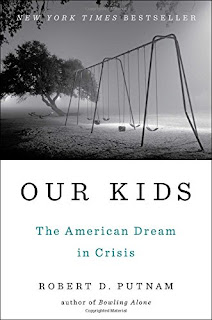
Baby Boomers (i.e., those born between 1946 to 1964) from all parts of our nation and all walks or stations in life have a remarkable degree of similarity of shared experiences associated with childhood and/or coming of age. This is not mere nostalgia but rather a reflection of a confluence of several major factors or variables that profoundly shaped the lives of those born in the aforementioned period. In 2015, Robert D. Putnam published a book titled Our Kids: The American Dream in Crisis. As the Baby Boomer generation transitions into retirement, this is a very important read that enables one to understand the uniqueness of shared experiences that may seem quaint or outdated but are of vital importance in understanding where we have been, where we are now and where we may have gone off the rails.
A good many GNN followers are familiar with such childhood reminiscences as playing ball in the streets as well as the front and back yards in the neighborhood, riding bikes everywhere, staying out all day in summertime and not checking in with parents until dinnertime, drinking water out of a garden hose, and so forth. There were no "play dates" or "gated communities." People knew their neighbors along with their children. Factory workers, shop keepers, office workers, local government officials, teachers, public servants such as police officers, firefighters and so forth all lived on the same block. On the same block residents included high-income earners as well as those of more modest means. The only outward signs of wealth were either an extra car in the driveway, recreational vehicles (e.g., camper or speedboat), being the first in the neighborhood to have a color TV set or perhaps a swimming pool. Less visible but also significant signs of affluence were having a cabin or weekend getaway locale and perhaps a country club membership. All children, regardless of their economic status, attended the same schools and participated in the same extra curricular activities. Kids from all backgrounds found a relatively level playing field in the classroom as well as in the context of extra curricular activities (artistic or athletic).
Mr. Putnam's book, Our Kids, is a real page turner as he demonstrates the similarity of childhood experiences across different regions of the USA in which neighborhoods were far more representative of the population at large than today. Our Kids, does not so much as provide ready-made answers as it does in asking the right questions that helps to explain the way we were! It would seem that the key factors accounting for the unique shared experiences we find relatable as baby boomers is the confluence of economics (specifically a deeper, more well established manufacturing base greatly augmented by the 1960s Space Age), parenting and/or mentoring, family structure and supportive institutions (e.g., churches, schools, parks & recreation, libraries). While there are supporting statistics to document the author's observations, the book really shines when it focuses on the poignant real-life stories of people who grew up as baby boomers and those that followed.
As I read Our Kids, I was reminded about the importance of parenting as well as economics, especially in relation to education. In the greater Los Angeles area, for example, the difference in cost for a college education (think USC vs UCLA as a microcosm of private vs public institutions) was not so much a consequence of where your parents were on the economic ladder, but rather how the economy of that period provided greater choices for one and all. In my own experience, the kids who ended up attending USC rather than UCLA had more to do with how parents prioritized their personal spending, especially if you were a first-generation American (i.e., child of immigrant parents). Those parents chose to forgo having the latest model car or other amenities, did not own a weekend get-away residence, did not belong to the country club and often lived in a more modest, less ostentatious home in order for their children to pursue higher education. Those kids who were on scholarship (including athletics or sports) either at private or public institutions had parents who were more interested in what went on in the classroom than on the ball field.
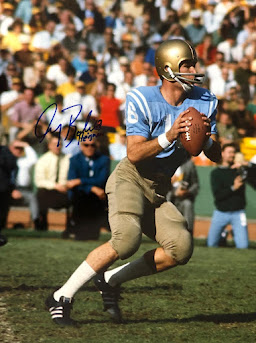
A good example was UCLA's Gary Beban (whose parents were of Croatian and Italian heritage), the university's only Heisman Trophy Winner (1967) who noted in multiple interviews that his mother and father ALWAYS expressed interest in how he was progressing with his studies but cared less about his athletic exploits (though taking pride he excelled at both by also achieving status as an Academic All-American to accompany his Heisman Trophy). Mr Beban, who graduated on time with a Bachelor's degree in European History, himself stated he was at UCLA for the scholarship and to pursue higher education.
Mr Beban's experience reminds many of us that we were greatly blessed to have grown up in a two-parent household in which a stay-at-home mom complemented the father who worked full time to provide for the family. There were teachers who went the extra mile in offering tutoring or special tips to how parents could work with their kids on improving their basic skills in reading, writing and mathematics so they would not be left behind. Clearly it was a very different time and place in our nation's history. I could go on, but you get the idea of the subtle but critical interplay of economics, parenting/mentoring, family structure and supportive institutions that has shaped the common experiences we recall as baby boomers.
Our Kids, by Robert D. Putnam, is clearly an important book and worth sharing with others to document that our shared memories are not the by-product of nostalgia but very real and life affirming.
Have any of you read this book, and if so, what are your impressions? What special experiences did you have that perhaps may not be relatable to the present generation but help to define who you are? Please share your thoughts by posting to the Galaxy FACEBOOK page @galaxynostalgianetwork, (and please remember to "like" us when doing so) or via e-mail to the GNN web site.
If you would like, please connect with me via LinkedIn (where my active following is now 1,100+ and steadily growing). View my profile at: https://www.linkedin.com/in/rev-protodn-george-haloulakos-cfa-bab6b43
Thursday, December 2, 2021
"WAR AND REMEMBRANCE" - World War I and Christmas on the Battlefield
by George Haloulakos
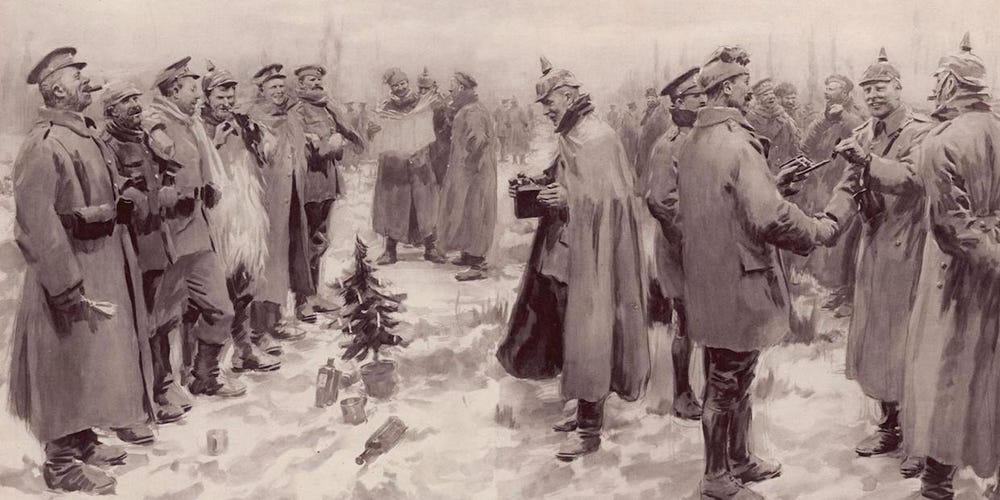
Last month's GNN Blog about the "Peanuts" comic strip (written and illustrated by Charles M. Schulz) prompted a number of reminiscences about Charlie Brown's pet dog, Snoopy. As we are in the midst of the Holiday Season, this appropriately included vivid recollections about "Snoopy's Christmas," a hit song from 1967 by The Royal Guardsmen that is repeatedly played on radio airwaves along with time honored Holiday themed songs throughout the month of December. In this classic Christmas novelty song Snoopy is on the losing end of a dogfight with the Red Baron. But just as it seems like it is all over for our hero, the Red Baron breaks out a bottle of Champagne and the two rivals celebrate Christmas with a holiday toast! The two World War I rival pilots part ways knowing they will resume combat on another day, but NOT on Christmas!
What is generally not known is that this novelty song is based on the historic event of the first Christmas Eve during World War I, often referred to as the Christmas Truce. It was during this time that German and British infantry men emerged from their trenches in which they bartered cigarettes, played soccer, sang Christmas songs, exchanged prisoners along with exchanging Holiday Greetings and holding joint burial services! With the truce running for several days there was extensive fraternization between enemy forces in open daylight that involved well over 100,000 soldiers! This amazing event for humanity (that also extended to French and Belgian forces) occurred despite the orders of high command. Candles were lit and placed upon both trenches and Christmas trees, thereby reminding everyone that Light Eternal from this Holy Season would shine forth, even on the battlefield.
The National WWI Museum and Memorial has an online collection of personal accounts from this unique historic event and we would encourage our GNN audience to learn more by checking this out. In the meantime, we would like for any of you that have served in the military (including your loved ones) to please share special Christmas memories connected with your military service -- especially during wartime -- by posting to the Galaxy FACEBOOK page (and please remember to "like" us when doing so) or via e-mail to the GNN web site.
If you would like, please connect with me via LinkedIn (where my active following is now 1,100+ and steadily growing). View my profile at: https://www.linkedin.com/in/rev-protodn-george-haloulakos-cfa-bab6b43
Tuesday, November 2, 2021
A CHARLIE BROWN THANKSGIVING - Why We Love "Peanuts"
by George Haloulakos
The "Peanuts" comic strip written and illustrated by Charles M. Schulz -- with an original run from 1950 - 2000 and continuing in reruns afterward -- is perhaps one of the best known and most familiar to multiple generations worldwide. Beginning in the mid-1960s, this most beloved comic strip started to air on network TV as Charlie Brown, his faithful dog Snoopy plus his friends Linus, Lucy, Peppermint Patty, Marcie, Franklin and others went from print media into video! In short order, celebrating various holidays or events with the "Peanuts" gang became a tradition for baby-boomers and every generation that has followed.
The Halloween and Christmas programs are perhaps the most popular and well known in the franchise, with the Thanksgiving program often getting overlooked because it is sandwiched in between! While the Thanksgiving program does not have the same memorable scenes as the Halloween (e.g., Snoopy as a World War I flying ace vs the Red Baron) or Christmas (e.g., Linus reciting the Nativity of Christ from the Gospel of Luke in the Holy Bible), it is a fun, whimsical reminder on the meaning of Thanksgiving as well as activities associated with late November. Here are two examples from "A Charlie Brown Thanksgiving" that might inspire you to check out this Emmy Award winning TV special:
- The show opens with Lucy enticing Charlie Brown to kick the football she is holding by calling it a Thanksgiving tradition. Just as Charlie Brown approaches on a running start to make the kick, Lucy then yanks the ball away (as shown so many times over the decades) stating that some traditions just fade away!
- Snoopy and his best friend, Woodstock (the little yellow bird frequently shown as the dog's playmate) are dressed in Pilgrim attire getting ready for Thanksgiving dinner.
Like all Charlie Brown programs, there is more to unpack. But suffice to say, whether recalling this is a season for gratitude or simply gathering with loved ones and friends, the "Peanuts" gang allows us to either experience, reflect or perhaps reimagine holiday-themed events or special memories through the eyes of a child but with adult sensibility. As this blog is being written, the World Series is being played out.
As the 2021 baseball season wraps up, this reminds me of how Charlie Brown and his best friend Linus have a legendary connection with the Fall Classic. In December 1962 and one month later in January 1963, the final play of the 1962 World Series featuring the San Francisco Giants vs the New York Yankees -- [reviewed in our August 2020 GNN Blog "The Summer Game"] -- was immortalized in the "Peanuts" comic strip. Both variants feature Charlie Brown and Linus sitting on the curb in a moment of reflection for several frames, both having a visage of appearing despondent and distant. The final frame in both variants features Charlie Brown jumping to his feet with his mouth wide open as he lets out his grief: In the first variant - "Why couldn't McCovey have hit the ball just three feet higher?" while in the second variant - "Why couldn't McCovey have hit the ball even two feet higher?" Like his creator Charles Schulz, Charlie Brown was an avid Giants fan. In the comic strip world of "Peanuts," we experience the anguish of such moments in time through a fusion of adult stoicism and child-like outbursts that are a reminder on how our childhood stays forever with us.
As, you, our wonderful GNN audience gather with loved ones and friends to celebrate the Holiday Season, take time out from your busy schedules to watch Charlie Brown and the "Peanuts" gang experience the unbridled joy and excitement we all remember as children, and hopefully carry with us in our hearts. Be sure to share your favorite memories of "Peanuts" by posting to the Galaxy FACEBOOK page (and please remember to "like" us when doing so) or via e-mail to the GNN web site.
If you would like, please connect with me via LinkedIn (where my active following is now 1,100+ and steadily growing). View my profile at: https://www.linkedin.com/in/rev-protodn-george-haloulakos-cfa-bab6b43
Monday, October 4, 2021
"CROCODILE" DUNDEE - 35th Anniversary: "G'Day Mate!"
by George Haloulakos
With this familiar greeting, this month's GNN Blog takes this opportunity to celebrate the 35th Anniversary of "Crocodile" Dundee. Released in 1986, this action comedy featured Paul Hogan in the lead as the rugged outdoorsman Michael J. "Crocodile" Dundee (aka "Mick") with Linda Kozlowski as newspaper journalist Sue Charlton, his romantic interest. The film begins in Australia where we bear witness to Mick's physical prowess in the Australian Outback and the burgeoning romance with Sue, a newspaper journalist who is there to write a lengthy feature on "Crocodile" Dundee for her employer. It then shifts to New York City as the newspaper (owned by Sue's father) decides to bring Mick for an all expense-paid visit to the USA as a pretext for continuing the feature story.
While in Australia, Mick is clearly in his element having fun with his mates while escorting Sue deep into the Outback providing physical evidence for his legendary exploits that are to be profiled in Sue's feature article. When the scene shifts to New York City, the film becomes a comedy of manners as Mick deals with various situations while somewhat bemused by American big city customs and behavior. Among just a few of the social situations that our hero deals with, while delivering some memorable lines:
Our hero tells a New York driver to "get on the right side of the road you pelican!" Mick concludes the reason there are so many car accidents in the US is that the steering wheel is on the wrong side of theThere is much more, especially when Mick attends various social gatherings. But this small sample reflects the "fish out of water" theme as the film audience connects with the man who has ventured from the Australian Outback into a very different kind of jungle, New York City (aka The Big Apple). Mick is able to skillfully navigate the urban jungle while making friends, winning the admiration of the public and maintaining his integrity while exercising common sense. He is a person who shows himself to be attractive to both men and women with a carefree, devil-may-care approach to life.
Vintage film buffs will note that in some ways "Crocodile" Dundee is a 1980s variant of the 1942 MGM classic "Tarzan's New York Adventure" that starred Johnny Weismuller. Both of our heroes remain quietly but firmly self-confident as they try to make sense of big city behavior and civilization. When circumstances require bravery and integrity, both Tarzan and Mick are able to come to the rescue. It is a theme that transcends time while successfully being able to poke fun at prevailing social customs of the day!
The financial success of "Crocodile" Dundee (it earned over $328 million in worldwide box office receipts) led to two sequels -- "Crocodile" Dundee II (1988) and "Crocodile" Dundee in Los Angeles (2001).
One of my favorite lines came from the Los Angeles sequel. Early in the film the audience -- along with Mick -- sees actor George Hamilton playing himself in a cameo appearance at a Hollywood party where he is extolling the virtues of coffee enemas. Later in the film when Mick is hosting a fellow Outback survivalist named Jacko who is visiting LA, the two outdoorsmen are seen walking along Hollywood Boulevard passing by a local gourmet coffee outlet. When Jacko suggests they have coffee, Mick (recalling his earlier encounter with George Hamilton) tells his friend "Oh no, mate. You do not want to have coffee the way they do here!"
Part of the enduring fun is seeing Mick handle all the different challenges - be it through physical prowess, common sense, humor and the cleverness we associate with survivalists - while having the respect and love of Sue as well as the deep friendship with his mates from the Australian Outback. It's a winning formula that still holds true more than 35 years later!
If you have special memories of our favorite Australian Outback survivalist that you would like to share, please post to the Galaxy FACEBOOK page (and be sure to "like" us when doing so) or via e-mail to the GNN web site.. Please connect with me via LinkedIn (where my active following is now 1,100+ and steadily growing). View my profile at: https://www.linkedin.com/in/rev-protodn-george-haloulakos-cfa-bab6b43