Friday, August 25, 2023

We Welcome Margaret Sizemore Clark:

Thanks for checking out my blog post! 

I was born in Ridgecrest, CA in 1954, and am the middle of six children.  My parents worked for the Navy as civil servants, having arrived at China Lake in 1950, and all six of us graduated from the same high school.

   I attended grade school on the base until second grade when we moved out to the town of Ridgecrest.  I went to junior high and high school there, graduating in 1972, then went to West Hills Junior College in Coalinga, CA where I met my future husband.  After receiving my AA degree, I transferred to Cal State Bakersfield for a year, then transferred again to Cal State University, Fresno where I earned a BA in History and a teaching credential.

   We had three children and after they were established in school, I went back to college in 1998 to earn my multiple subject credential. I taught Kindergarten, First, and Second grades for 16 years, then retired in 2014.  I became a substitute teacher and when my husband retired, we moved to Washington State where we enjoy traveling and spending time with two of our five grandchildren.

Writing…and Receiving a Letter


Something that has sadly gone by the wayside with the advent of electronic mail and the cell phone is the hand-written, newsy letter. It might have been that letter from home that would catch one up with all the happenings.  Or it may be a letter from that one far away who is filling you in on all the events and happenings in their part of the world.


   Was there a pen pal in your past?  I can remember having a pen pal who lived in Ireland.  I looked forward to her letters and the stamp on the envelope that didn’t look like the stamps we had here in the US.  What a thrill to go to the mailbox and find something addressed just to me!  


   After graduating high school, I went away to a junior college that was four hours from where my family lived.  I did not have the luxury of having a car like many of the other kids had, so being able to go home on a weekend was not an option.  And, like lots of other teenagers who leave home, homesickness was becoming a very real thing as the weeks passed without seeing my family. In those days long distance had a cost to it, the call had to be made during certain hours, and it had to be initiated from a payphone since cell phones were non-existent and even having your own rotary-dial phone in your dorm room was unheard of.  


   Now, I must come clean on the reason for starting to write letters: I had a boyfriend “back home”. Ah yes, the angst of being away from him was the real motivation for writing long, newsy letters.  And since I’m being forthright, there were some letters with mushy stuff but nothing torrid or gushy, like love letters were portrayed in the movies. My letters were short to begin with and included details about my new roommate in the dorm, the classes I was taking, new people I had met, and other general topics.  He in turn wrote about the people in our town, his job, his family, and his beloved car that he was working on.  As my letters became a little longer, I started embellishing them with little drawings and stickers which I added to the pages inside the envelope and to the outside as well.  This was when my addiction to paper began; If I had the means I should have invested in Hallmark because this was the beginning of a lifelong pattern that still hasn’t ended!  I started looking for cute stationery with pictures on the pages, or tablets that featured several different colored papers and had matching envelopes (that were sold separately.) I dropped into the local Hallmark store about once a week to see what was new, and I purchased so many stickers that I had to start keeping them together them in a box so that I wouldn’t forget what I had available to me. There were also the cute little enclosures that I could slip into the envelope along with my letter. The possibilities were endless!


   Like a lot of long-distance relationships, my boyfriend and I eventually stopped writing to each other, but that didn’t end my letter-writing!  I had made good friends at college so when the summer came and everyone went home, letters started going back and forth.  Every day I would watch for our mail lady to come down the dirt road, stop at our mailbox, then move on.  I would run to the mailbox (partly out of anticipation of a letter from a friend, but mostly because we lived in the desert and the sand was HOT on my feet.  Shoes were for school!)  The box was yanked open and the mail pulled out.  There was a quick return run to the house where the mail was gone through and I would scan it for familiar handwriting.  If I happened to receive a letter that day, I would savor its contents in the privacy of my bedroom and take in all the details coming from the writer.  Then I would get out my boxes of stationery and would immediately compose a response so that it could be mailed the next day.


   Many years later a special friend from college with whom I had kept in contact related to me how she had always looked forward to my letters and the envelopes in which they had arrived.  The part she remembered even more clearly were the pages inside that shared our lives after we left school.  The letters gave way to phone calls, and even those became fewer as we became “busy” with children and careers.  This year I lost that friend to cancer but I have several of her cards and letters she sent over the years, so I still have a part of her with me.  


   Today communication is so easy!  Pick up the phone and call any time of the day.  Send a text (with a picture to boot) whenever you feel like it.  Write an email and receive an immediate response…or not.  But there are still those times when I feel like writing a good, old-fashioned, hand-written letter complete with illustrations and stickers.  It’s like finding an old friend that’s just been waiting for me to take the time to sit down and let the words flow.


   Give letter-writing a try sometime!  It can be therapeutic and it reminds the recipient you were thinking of them in a special way.


Margaret

@MargaretSizemoreClark


Tuesday, August 1, 2023

 AUGUST 2023

- Around the World With Ivan Tors -
By Rev Protodeacon George A. Haloulakos

The dog days of August is an opportunity to take a trip to far away places in another time through the magic of the classic TV programs and films of Ivan Tors.  Today's television viewers are immediately able to identify and connect the names of well known producers, screenwriters and/or directors with a specific genre, especially since the 1980s.  Two such examples are Donald Bellisario ("Magnum P.I.," "Quantum Leap," "JAG" and "NCIS") and Dick Wolf (the "Law and Order" franchise).  However, long before Messrs Bellisario and Wolf became household names, viewers of both classic film and television flocked to theaters or gathered in their living rooms to watch the programs of Ivan Tors, who is inextricably connected with emphasizing non-violent but exciting science fiction, underwater adventures and stories involving animals.  A partial list of classic Ivan Tors TV shows reads like a roll of honor for fun family fare:  "Sea Hunt" (1958-1961) starring Lloyd Bridges, "Flipper" (1964-1967), "Gentle Ben" (1967-1969), "Cowboy in Africa" (1967-1968) featuring Chuck Connors and "Daktari" (1966-1969).


"Sea Hunt" helped popularize the sport of scuba diving while the animal themed "Flipper" (dolphins) and "Gentle Ben" (bears) helped raise awareness about the innate intelligence in the animal kingdom.  "Daktari" and "Cowboy in Africa" were both set in Africa while providing a fusion of exotic animals, adventure and the importance of preservation of rare species.  The popularity of these TV shows arose from their big screen success as Mr Tors would typically make a film first, and then develop a show from that film. This double-play combination of big screen films that translated into successful TV series proved to be a financial bonanza.  A partial list of these films makes the connection with their corresponding TV series self evident: "Flipper" (1963), "Flipper's New Adventure" (1964), "Clarence, the Cross-Eyed Lion" (1965), "Gentle Giant" (1967) and "Africa Texas Style" (1967).  The combined success on both the big and small screens helped create unforgettable animal characters -- Flipper the Dolphin, Ben the American Black Bear, Clarence the Lion and Judy the Chimpanzee -- that are indelibly framed in the memories of Baby Boomers who were avid movie goers while coming of age watching the classic TV shows of the 1960s. 


Mr Tors created programs that were popular with both adults and children.  Indeed, they were excellent shows that were watched by the entire family, especially during prime time.  Moreover, the big screen films were events that parents could enjoy with their children as there was just the right balance between serious but non-violent themes.  Since most of the stories involved animals, this made them all the more endearing.  Mr Tors not only had a keen sense of delivering high quality content that was entertaining for all ages, but he was a successful entrepreneur.  He developed a sustainable business model based on syndication of his different programs when there were limited spots on the major TV networks.  This has now become more commonplace, especially with the availability of streaming.  But to be able to reach mass market audiences worldwide without the major networks in the 1960s exemplifies true ingenuity.  The life of Ivan Tors (1916-1983) is a true American success story, and we would commend our Galaxy Nostalgia Network audience to learn more about this amazing person whose contributions span multiple generations.  Please share your thoughts about your favorite Ivan Tors film or TV show by posting to the GNN FACEBOOK page (and "liking" us when doing so) or write to us directly at: GalaxyMoonbeamNightSite@gmail.com


Thursday, June 29, 2023

 JULY 2023

- A Galaxy Summer Under the Stars -
By Rev Protodeacon George A. Haloulakos

This month's blog entry is an opportunity for you, our wonderful Galaxy Nostalgia Network audience, to help write the script for "A Galaxy Summer Under the Stars."  Over the past 20 to 25 years, it has become a summer tradition in either private or public venues to binge watch classic films (in both outdoor and indoor venues) with either a unifying theme or dedicated to a particular film star.  What are some of your favorite films or motion picture stars who delivered memorable screen performances but perhaps with the passage of time are overlooked or underappreciated by mass market audiences?  Summertime is the season in which we can share and enjoy cinematic gems, so we invite you to please share your recommendations either by posting to the GNN FACEBOOK page (and "liking" us when doing so) or writing directly to us at: GalaxyMoonbeamNightSite@gmail.com

To get us started, I will offer up a combination theme of unique Academy Award Winners while celebrating the 50th anniversary of 1973 in Film.  In last month's GNN Blog, we marked the 50th anniversary of Bruce Lee's unexpected passing that occurred just weeks before the summer release of his signature film "Enter the Dragon" (regarded as one of the greatest martial arts films of all time).  A Galaxy Summer Under the Stars would certainly be a fitting venue to binge watch various Bruce Lee martial arts films.  As a continuation of this celebration of great media stars, I would offer two unique 1973 films -- both featuring very special Academy Award winners in supporting roles -- that encompass the spectrum of the oldest and youngest winners by an actor and actress.
We begin on the "older" side of the spectrum by saluting John Houseman (1902-1988), who won the Academy Award for Best Supporting Actor for his portrayal of Professor Charles Kingsfield in the 1973 film "The Paper Chase."  Houseman's portrayal of a Harvard Law School professor and his impact upon his students was so convincing, that he reprised the role in the TV variant of "The Paper Chase" that aired during 1978-1979 and 1983-1986.  His was a more intimidating and formidable version of what is often referred to as a "Mr Chips" teacher persona.  Houseman's award winning performance truly exemplified that a supporting actor is the pedestal upon which the lead actors are able to shine forth.  This is consistent with his earlier behind-the-scenes collaborative work with actor/director Orson Welles (The Mercury Theater, "Citizen Kane") and writer Raymond Chandler in "The Blue Dahlia."  At age 71, rather than retiring to a quiet life, Houseman literally became a legendary film and TV star front-and-center to new generations of fans after having made his reputation as a skillful behind the scenes professional.  Whether on screen or off, he provided the foundation for memorable film and TV performances for multiple generations.
Our Galaxy Summer Under the Stars would not be complete without a salute to Tatum O'Neal (born 1963), who in the same year (1973) at age 10 became the youngest person to win a competitive Academy Award for her portrayal of Addie Loggins, a child con artist in "Paper Moon" opposite her father, Ryan O'Neal.  Fifty years later, Tatum's memorable performance is differentiated by the dynamic of working with her real-life father in a film that was shot in Black & White to give it a vintage look.  The spontaneity of this pairing continues to resonate especially as it vividly reflects the Midwest during the Great Depression Era.  The real life tribulations later experienced by Ms O'Neal (e.g., divorce, narcotics addiction, arrest) make her Academy Award winning performance all the more poignant by providing a striking contrast between cinema and real life.

The 1973 John Houseman / Tatum O'Neal Academy Award winning duo spanning opposite ends of the age spectrum is a reminder of the magic of Hollywood.  It is this magic that is celebrated in Our Galaxy Summer Under the Stars.  What films, actors and actresses bring magic to your heart?  We look forward to receiving your special memories as we gather together with a box of popcorn to celebrate our favorite screen stars!

Wednesday, May 31, 2023

 JUNE 2023

BRUCE LEE 
- "Be Water, My Friend" -
By Rev Protodeacon George A. Haloulakos

Bruce Lee (1940-1973) was a transcendent martial artist and one of the most enduring pop icons from the 20th century.  As an actor, director and teacher, Lee's magnetic, graceful and lethal presence in film & television plus his philosophy helped to popularize martial arts worldwide during the late 1960s and early 1970s.  Half a century after his unexpected passing, Lee's influence continues to shine forth spanning across all demographics and cultures.  In honor of his pioneering work and continuing influence, Time magazine named Bruce Lee one of the most important people of the 20th century.


Most baby boomers were first introduced to Bruce Lee when he co-starred as Kato in ABC's The Green Hornet (with Van Williams in the title role) during its 1966-67 single season run.  It was during this time that Lee demonstrated the strength of character that enabled him to become a pioneer in film & television, as well as in martial arts.  Eschewing the show director's instructions to fight in American style with fists and punches, Lee insisted on fighting in the style of his expertise.  Lee was so fast that he had to slow down his movements so they could be captured on film for the viewing audience!

When The Green Hornet was cancelled after one season in 1967, Lee found himself out of work.  So he focused on creating, developing and refining his Jeet Kune Do martial arts style that emphasized flexibility, practicality, efficiency and speed.  Lee remained in Hollywood where he became a private teacher to legendary film, television and sports stars that included but was not limited to James Coburn, Steve McQueen, Kareem Abdul-Jabbar and Sharon Tate.  As a teacher of martial arts to the stars, Lee was able to refine his skills in martial arts, acting and eventually directing, while he concurrently upgraded his professional network.  His entrepreneurial instincts and willingness to take risks in the venue of international cinema enabled Lee to break through a variety of barriers and become an enormous success on the big screen culminating with the 1973 film Enter the Dragon, that forever established him as a martial arts legend.

Bruce Lee's philosophy that enabled him to become a transcendent, lasting influence is expressed in his exhortation "Be Water, My Friend."
"Empty your mind.  Be formless, shapeless like water.  You put water in the cup: it becomes the cup.  You put it into the teapot; it becomes the teapot.  You put water into the bottle; it becomes the bottle.  Now water can flow, or it can crash!  Be water, my friend."  [Source: brucelee.com]


Lee's star power is not only exemplified by having his "star" immortalized on both the Hollywood Walk of Fame and Hong Kong's Avenue of Stars, but his gravesite in Seattle's Lakeview Cemetery remains one of the most frequently visited tourist sites in the Emerald City.  As tip of the hat to being a teacher (sensei) to the stars, legendary action-film actors James Coburn and Steve McQueen served as pallbearers for Lee's burial service in Seattle.  At the conclusion of the memorial service, Coburn and McQueen tossed their white gloves into the grave with Lee's casket while paying tribute to their sensei.

This summer as we mark the 50th anniversary of Bruce Lee's passing, please share your favorite memories of this legendary figure by posting to the GNN FACEBOOK page (and "liking" us when doing so) or writing directly to us at: GalaxyMoonbeamNightSite@gmail.com

Monday, May 1, 2023

 MAY 2023

"The Sting" 
- Celebrating its 50th Anniversary -
By Rev Protodeacon George A. Haloulakos

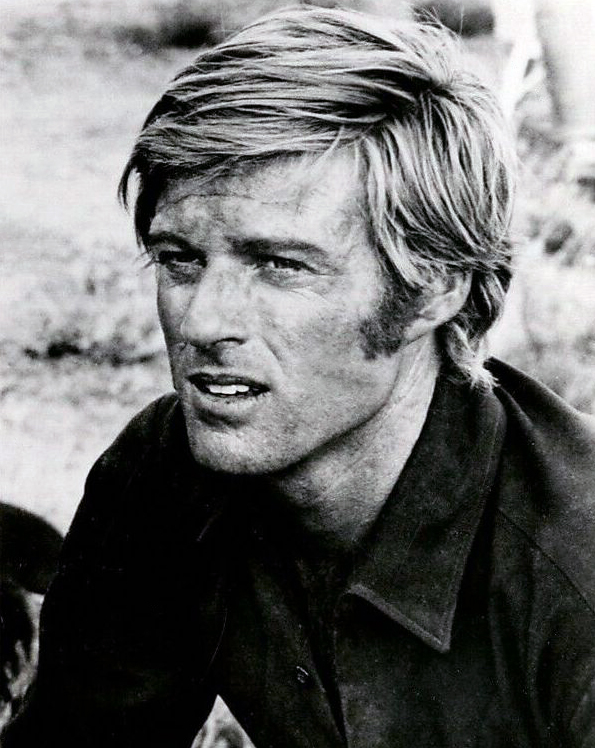
This year marks the 50th anniversary of the Academy Award winning motion picture "The Sting," which forever solidified Paul Newman and Robert Redford as one of cinema's greatest duos.  At the time of its release and later at the Academy Awards (where it won seven Oscars, including Best Picture) it was immediately celebrated as pure fun and escapism at its cinematic best.  For a war weary nation embroiled in political scandal (i.e., The Vietnam War and Watergate) it offered a two-hour escape into the 1930s where two professional con artists (Newman and Redford) orchestrated a complex, elaborate scheme to swindle a mob boss (played by Robert Shaw).  "The Sting" is unusual in that every time one watches the film, there are nuances and details that emerge with each viewing that deepens the appreciation for the obvious loving care that went into crafting this work of pure entertainment.  What makes the film so satisfying with each viewing, is that the triple-twist ending makes one realize that it is the audience, along with the mob boss, who have been conned into a multi-layered, deceptive plot.   The finale leaves filmgoers surprised but satisfied to have witnessed such a delightful story play out into a conclusion that sparked conversation questioning what just happened!


If you are looking for a film that has a magical ending executed with style and daring, then "The Sting" is one you might want to add to your watch list.  With Newman, Redford plus Robert Shaw -- all at their best in playing the roguish lead characters -- is a stellar supporting cast that reads like a Who's Who of Hollywood (e.g., Charles Durning, Eileen Brennan, Ray Walston, Harold Gould).  The film is presented in discrete or distinct sections with title cards that bear strong resemblance to the lettering and illustrations associated with The Saturday Evening Post.  The memorable soundtrack is Ragtime music featuring Scott Joplin's "The Entertainer."  Here are a few fun, but little known facts about "The Sting" that may engender further whimsical conversation among classic film fans.


> Jack Nicholson was offered the lead role but turned it down!
> The role of the mob boss was almost given to Richard Boone but instead went to Robert Shaw.
> Robert Shaw injured his leg playing handball before filming began.  Instead of withdrawing from the film, Shaw was encouraged to incorporate the limp into the portrayal of his character.  Thus the limp was authentic and added yet another signature detail to the tapestry of the film.


"The Sting" was the second and final on-screen pairing of Newman and Redford.  Their first film was "Butch Cassidy and the Sundance Kid" in 1969.  Given the enormous if not legendary status of both of these films, one more Newman-Redford pairing would have truly required a very special script, that regrettably never materialized.  As we celebrate the Golden Anniversary of "The Sting" perhaps we should be satisfied that the legendary film duo left us wanting more as they remain forever etched in our minds at the top of their craft.

Thursday, March 30, 2023

 APRIL 2023

George Raveling & Rev Dr Martin Luther King Jr
- Crossing Paths at the March on Washington -
By Rev Protodeacon George A. Haloulakos

Each year the first week of April brings to a conclusion the annual NCAA Basketball Tournament (aka March Madness) while also marking the anniversary of the assassination of the Rev Dr Martin Luther King Jr.  Interestingly enough, as we reflect on the amazing life and ministry of the Rev Dr King, we find there is a unique connection with collegiate basketball in the person of Hall of Fame coach George Raveling.  Therefore, recounting the story behind the life paths of a pioneering basketball coach and a Nobel Prize winning Civil Rights leader intersecting at a unique moment in history is especially timely during the first week of April.


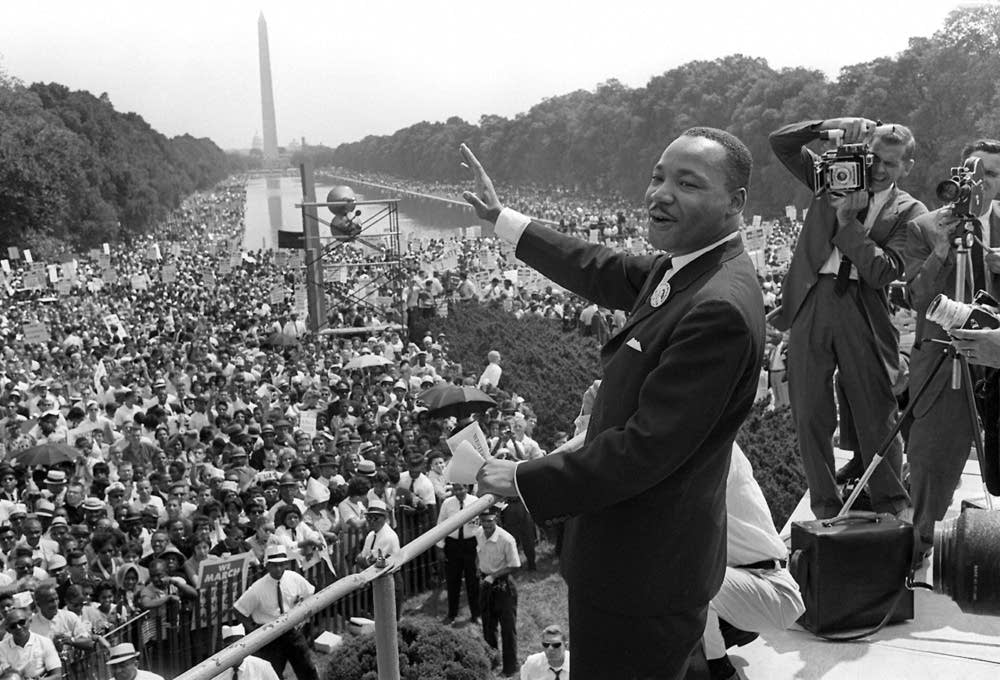
In August 1963, several days before the March on Washington, Raveling was having dinner at a friend's home in Claymont, DE.  The father of Raveling's friend, encouraged both young men to attend the upcoming event while providing them travel money and the use of one of his cars to drive to Washington, DC.  Upon their arrival, Raveling and his friend volunteered to serve as security guards thereby ending up standing a few feet away from the Rev Dr King on the podium at the Lincoln Memorial.  As Rev Dr King was nearing the close of his historic speech, the famed Gospel singer Mahalia Jackson was heard in the background saying "tell 'em about the dream, Martin, tell 'em about the dream."  Ms Jackson was familiar with this theme as she had heard King talk about this in his previous speeches at Selma and Detroit.  At this point, in a moment of inspiration, Rev Dr King went off script -- (i.e., the "I Have A Dream" passage is NOT in the original typewritten hard copy of the speech he had in his hands when speaking at the Lincoln Memorial) -- by ad-libbing the "I Have A Dream" part because he realized his prepared remarks were not fully rising to the spirit of the occasion.  This spontaneous addition was the signature portion of a magnificent speech.  As Rev Dr King took the papers with his prepared remarks from the podium, he came face to face with Mr Raveling, who asked him "Dr King, can I have that?"  King handed the speech to Raveling just moments before a throng of people came between the two men.  Raveling folded up the papers and kept them on his person as the March on Washington concluded.

It should be noted that several hundred copies of King's prepared speech had been distributed to reporters, but ALL of these copies -- except for the one King himself had at the podium and then gave to Raveling -- had an official stamp.  The only markings on this document are the underline and asterisk Raveling later inserted to indicate where King had deviated from his prepared remarks.


In the decades that have followed, Mr Raveling has had a wonderful life and career in mentoring others through a Hall of Fame basketball coaching career.  When sharing his remembrance of this amazing moment in time, Raveling is humbled to be the keeper of such a precious document.  He continues to help others prepare for life by teaching them to be ready for the right moment that can come at any time!  The pursuit of the Dream expressed by Rev Dr King continues through the life and works of George Raveling and reminds all of us to always strive to be at our personal best.

Wednesday, March 1, 2023

 MARCH 2023

TIME TRAVEL via "Star Trek"
- Remembering Favorite Journeys In Time -
By George A. Haloulakos

This month we talk about a perennially interesting topic - Time Travel!  The concept of Time Travel has been a recurring theme in literature, film and television that goes back nearly two centuries.  For example, Charles Dickens used Time Travel via the Ghosts of Christmas Past, Present and Future in his classic morality tale "A Christmas Carol" published in 1843.   In 1895, H.G. Wells wrote a science fiction novel, "The Time Machine," that was later made into a full length motion picture (1960) to be followed by several remakes.  Time Travel has been adapted by lots of TV shows and made-for-TV movies, but perhaps the most successful franchise to employ Time Travel has been the "Star Trek" franchise in all its variants for more than 50 years.  The various "Star Trek" series and movies have all used Time Travel to various degrees, and often with critical success.  A good number of these plotlines seem to involve very dramatic, major historic events, often incorporating noteworthy heroes and heroines from recorded history.  In each case that was related to a major historic event or public figure, the Time Travel theme is used by the "Star Trek" characters to save humanity or perhaps the galaxy!   No doubt many of you in our GNN audience have your own favorites, and so we invite you to please share it with us by either posting to the GNN FACEBOOK page (and "liking" us when doing so) or send it directly to the Galaxy Nostalgia Network at:  GalaxyMoonbeamNightSite@gmail.com


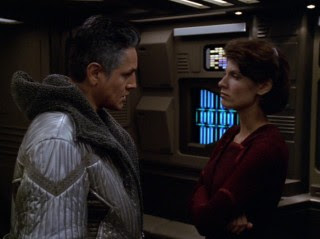
When submitting your favorite Time Travel themed "Star Trek" episode or movie, be sure to include your reason or reasons for doing so.  This is a fun topic for people of all ages, backgrounds and with various interests.  My personal favorite Time Travel "Star Trek" episode is "Timeless" - the 100th episode of the "Star Trek - Voyager" series (with an original air date of November 18, 1998).  My reason for this choice is that it is one of the few Time Travel themed episodes that did not involve a major historic event but was far more personal in nature.  "Star Trek" in all of its variants exhibited its greatest attribute when it highlighted strength of character.  In this particular episode it begins fifteen years in the future where First Officer Chakotay and Operations Officer Harry Kim discover their spaceship Voyager frozen in ice following a crash landing in which all crew members aboard were killed on impact.  The only survivors, Chakotay and Kim, avoided the disastrous accident because they were piloting a small scoutcraft leading the larger spaceship (Voyager) using slipstream quantum technology in an attempt to return to Earth in a matter of moments rather than decades.  The slipstream technology was unstable, and this resulted in the scoutcraft reaching Earth safely but leaving Voyager behind to spiral out of control and crashing on the aforementioned ice planet.


The crash sequence along with Chakotay and Kim recovering the remains of the crew fifteen years later are truly haunting.  Chakotay and Kim have returned to recover the body of Seven of Nine, a Borg drone with technology able to receive messages from the future.  Using a stolen Borg temporal transmitter, Chakotay and Kim hope to send a message back in time to avoid the accident that killed all of their crewmates.  Aided by Voyager's holographic medical doctor (who is activated by a mobile emitter recovered from the crash site) and Chakotay's girlfriend, Tess, they send a message back in time using Kim's new instructions aimed to help Voyager safely reach Earth, but this has no effect in correcting the quantum slipstream and Voyager is destroyed a second time!  Kim's follow-up attempt, this time using new instructions designed to cause the slipstream to fail prematurely so that Voyager will simply power down and not crash, is successful and tragedy is avoided.  The entire Voyager crew along with Chakotay and Kim, return safely to normal space, unharmed, and ten years closer to home (in what is a 75-year journey).


What makes this a compelling story is how Kim deals with survivor guilt in trying to make things right.  While Chakotay has seemingly moved on with his life, his girlfriend Tess -- knowing full well that if they are successful, the timeline in which she and Chakotay meet and fall in love, will be erased -- provides him the encouragement to do whatever is necessary to reverse Voyager's disastrous accident because she knows Chakotay's heart will always be with his beloved crewmates!  This selfless act of love is both inspiring and sad because it is evident that Chakotay and Tess are a strong couple who realize they have truly shared a very special moment in time.  Finally, when the timeline is restored, Kim learns his future self sent to his past self an encoded message along with the operational instructions directed to Seven of Nine.  As Kim watches the message from his future self on the viewscreen, his facial expression imparts a poignancy as he realizes the enormity of his actions in the alternate timeline.  The result is a significant increase in self-confidence and respect that Harry Kim had not yet experienced in his career, thereby giving him a renewed sense of purpose and hope.


While any story concerning Time Travel raises a host of "what-if" questions about how seemingly trivial events and unimportant people can have major impact on the historic timeline, "Timeless" is an episode in which its characters are taking action solely out of love for their comrades and friends that were left behind in a horrific accident.  Chakotay and Kim were willing to risk it all for personal reasons.  In my opinion, this is what makes this Time Travel episode so very special, and ultimately, my favorite in the "Star Trek" franchise.  What is your favorite?  We look forward to hearing from you, our wonderful Galaxy audience!